
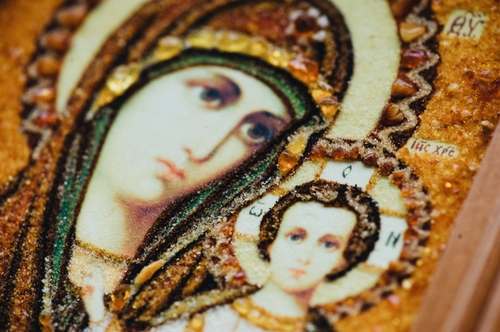
 It may be difficult to believe that the Roman Catholic Church would once speak about the silly Virgin Mary, but they did. This is a perfect example of what is called the etymology of words.
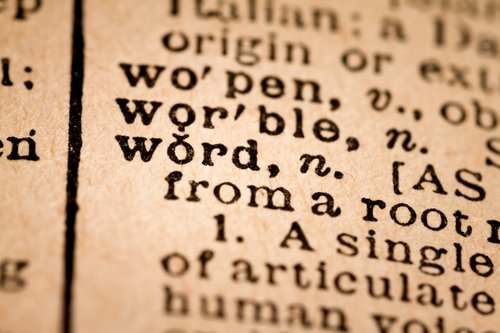
When you look at how the meaning of words have changed, it can be confusing, but studying the etymology is, put simply, taking a look at the history of these words.
Because we are often called silly, due to our radio shows, I thought that this would be a good example to use. So here is a short history of the word Silly.
Today, the word silly conjures images of playful foolishness, harmless pranks, and childlike antics, but the journey of this seemingly light-hearted word, from its original meaning to its contemporary usage, is a fascinating tale of linguistic metamorphosis.
Origins in Old English
The word can trace its ancestry back over many years. Its earliest form appears as seely or sælig in Old English, the version of English spoken in England from the mid-5th century until the Norman conquest in 1066, although there was a cross-over between this time and the use of Middle English, but more on that below. The original sense of seely was strikingly different from today’s use though, as it meant happy, fortunate, or blessed.
This root bears testament to the influences of the Germanic languages on English which, of course, has its basis as a Germanic language itself.
The Old English word sælig derives from the Proto-Germanic sæligaz, which also meant happy or blessed, and is related to the modern German word selig (which is translated as blessed or holy). In medieval England, to be described as seely was to be considered prosperous, lucky, or spiritually favoured—a far cry from the jovial foolishness that the term now suggests.
Medieval Shifts: Innocence and Simplicity
As we moved through the centuries, and Middle English took hold (which was around the 12th to the late 15th centuries), the meaning of seely began to shift. It started to acquire connotations of innocence and simplicity. It was used to describe people who were pure-hearted, innocent, or naïve—those who had not yet been touched by the world’s troubles or complexities. A seely person was gentle and simple, perhaps unworldly, but not foolish.
This semantic transition likely reflects broader cultural changes in medieval society, including shifting attitudes toward wealth, morality, and virtue. The notion of blessedness intertwined with innocence, suggesting that purity and simplicity of character were themselves a kind of spiritual fortune.
 Transition to Pity and Weakness
By the time Early Modern English emerged in the 15th and 16th centuries, the sense of silly had shifted again. The gently naïve seely became increasingly associated with vulnerability and weakness. Literature from this period often uses silly to describe those who are pitiable, defenceless, or easily exploited. Shakespeare, for example, uses the word in this sense repeatedly; in A Midsummer Night’s Dream, the phrase “silly souls” refers to innocent, helpless people.
This gradual change from fortunate to innocent and then to weak demonstrates the subtle ways in which social values and perceptions seep into language. The blessed innocence of earlier centuries became seen as a lack of worldly wisdom, and therefore as a kind of weakness deserving of pity.
Modern Evolution: Foolishness and Childlike Play
From the 17th century onward, silly continued to evolve, shedding its connotations of blessedness and innocence. Instead, it was increasingly applied to foolishness—particularly the kind that was harmless or light-hearted. The word came to describe actions or people that were not just naïve or weak, but comically or absurdly lacking in sense. By the 19th century, silly had largely acquired the meaning familiar to us today, playful stupidity, lack of seriousness, or childish behaviour.
In contemporary English, silly is seldom used to mean blessed, innocent, or weak. Instead, it is reserved for moments of light, often affectionate ridicule. Children are silly when they make faces or tell nonsensical jokes. Adults may be silly when they indulge in playful antics or, occasionally, when their actions lack rational thought.
Dialectical Survival and Related Words
Interestingly, the older forms of silly survive in regional English dialects and related languages. In Scots, for example, seely still means blessed or happy. In the Midlands, silly to mean weak or frail persisted well into the 20th century. The word’s Germanic cousin, selig, retains its original meaning in German to this day.